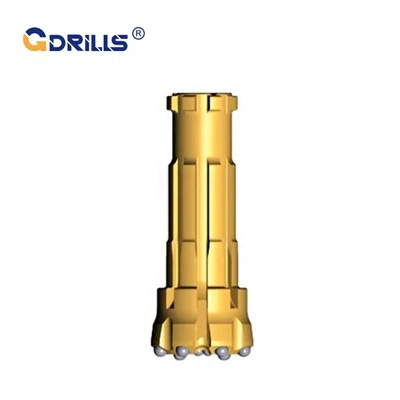
Drilling fluid plays a crucial role in the performance and lifespan of SD DTH (Down-The-Hole) Hammer Bits. As a supplier of SD DTH Hammer Bits, I have witnessed firsthand how different drilling fluids can impact the efficiency and durability of these essential tools. In this blog, we will explore the various ways in which drilling fluid affects SD DTH Hammer Bits and why understanding these relationships is vital for successful drilling operations.
1. Lubrication and Cooling
One of the primary functions of drilling fluid is to lubricate and cool the SD DTH Hammer Bit during the drilling process. When the bit is in operation, it generates a significant amount of heat due to the friction between the bit and the rock formation. Without proper lubrication and cooling, the bit can overheat, leading to premature wear and damage.
Drilling fluid acts as a lubricant by reducing the friction between the bit and the rock. This not only helps to extend the lifespan of the bit but also improves the drilling efficiency. By reducing friction, the bit can penetrate the rock more easily, requiring less energy and reducing the wear on the bit's cutting edges.
In addition to lubrication, drilling fluid also helps to cool the bit. As the fluid circulates around the bit, it absorbs the heat generated by the friction and carries it away from the bit. This helps to prevent the bit from overheating and ensures that it operates at an optimal temperature.
2. Cuttings Removal
Another important function of drilling fluid is to remove the cuttings generated during the drilling process. As the SD DTH Hammer Bit breaks up the rock, the cuttings need to be removed from the borehole to prevent them from interfering with the drilling operation.
Drilling fluid helps to carry the cuttings to the surface by creating a fluid flow in the borehole. The fluid flow is created by the circulation of the drilling fluid, which is pumped down the drill string and out through the bit. As the fluid flows back up the borehole, it carries the cuttings with it, depositing them at the surface.
Efficient cuttings removal is essential for maintaining the performance of the SD DTH Hammer Bit. If the cuttings are not removed from the borehole, they can accumulate around the bit, causing it to become clogged and reducing its effectiveness. This can lead to increased wear on the bit and a decrease in drilling efficiency.
3. Formation Stability
Drilling fluid also plays a role in maintaining the stability of the formation being drilled. When the SD DTH Hammer Bit penetrates the rock, it creates a cavity in the formation. Without proper support, the walls of the cavity can collapse, causing the borehole to become unstable.
Drilling fluid helps to maintain the stability of the formation by providing hydrostatic pressure. The hydrostatic pressure of the drilling fluid counteracts the pressure of the surrounding rock, preventing the walls of the cavity from collapsing. This helps to ensure that the borehole remains stable and that the drilling operation can continue safely.
In addition to providing hydrostatic pressure, drilling fluid can also contain additives that help to strengthen the formation. These additives can improve the cohesion of the rock and reduce the risk of collapse.
4. Corrosion Prevention
Drilling fluid can also help to prevent corrosion of the SD DTH Hammer Bit. The drilling environment can be harsh, with exposure to various chemicals and abrasive materials. Over time, these factors can cause the bit to corrode, leading to a decrease in its performance and lifespan.
Drilling fluid can contain corrosion inhibitors that help to protect the bit from corrosion. These inhibitors form a protective layer on the surface of the bit, preventing the chemicals and abrasive materials from coming into contact with the metal. This helps to extend the lifespan of the bit and reduce the need for frequent replacements.
5. Impact on Bit Design
The properties of the drilling fluid can also have an impact on the design of the SD DTH Hammer Bit. Different drilling fluids have different viscosities, densities, and chemical compositions, which can affect the performance of the bit.
For example, if the drilling fluid has a high viscosity, it can create a greater resistance to the flow of the fluid around the bit. This can require the bit to have a more efficient design to ensure that the fluid can circulate effectively. On the other hand, if the drilling fluid has a low density, it may not provide enough hydrostatic pressure to support the formation, which can require the bit to have a stronger design to withstand the increased stress.
As a supplier of SD DTH Hammer Bits, we take into account the properties of the drilling fluid when designing our bits. We work closely with our customers to understand their specific drilling requirements and recommend the most suitable bit design for their application.
Choosing the Right Drilling Fluid
Choosing the right drilling fluid is essential for maximizing the performance and lifespan of the SD DTH Hammer Bit. There are several factors to consider when selecting a drilling fluid, including the type of rock formation, the drilling depth, and the environmental conditions.
For example, if the rock formation is hard and abrasive, a drilling fluid with a high lubricity and cooling capacity may be required. On the other hand, if the rock formation is soft and porous, a drilling fluid with a high viscosity and good cuttings removal properties may be more suitable.
It is also important to consider the environmental impact of the drilling fluid. Some drilling fluids can be harmful to the environment, so it is important to choose a fluid that is environmentally friendly and meets the relevant regulations.


In conclusion, drilling fluid plays a crucial role in the performance and lifespan of SD DTH Hammer Bits. It provides lubrication and cooling, helps to remove the cuttings, maintains the formation stability, prevents corrosion, and can impact the design of the bit. Choosing the right drilling fluid is essential for maximizing the performance of the bit and ensuring the success of the drilling operation.