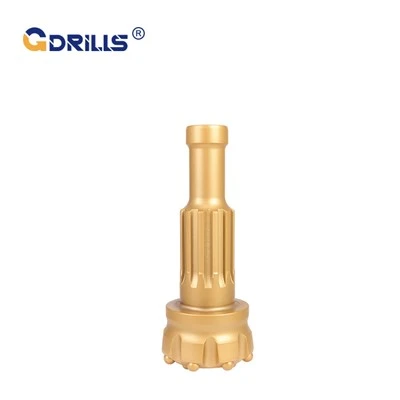
If you're working in mining, construction, or water well drilling, you know that the performance of your down-the-hole (DTH) button bits can make or break a project's timeline and budget. As a long-time supplier of BR DTH button bits, I've spent thousands of hours walking operators through drill sites, testing bits in tough rock formations, and troubleshooting why some bits punch through rock in record time while others stall, wear out prematurely, or require constant replacement. Evaluating a BR DTH button bit's performance isn't just about counting how many meters it drills-it's about a mix of field data, material science, and practical on-site observations that tie directly to your specific drilling conditions.
When I first started in this industry, I made the mistake of judging a bit by its initial drilling speed alone. I'd get a call from a new customer saying, "Your BR bit drilled 10 meters faster than the last one I used!" only to find out that bit wore out in half the time, leading to twice as many bit changes and total downtime that cost their project more than any speed gain. That's why today, the evaluation process I walk customers through is a holistic one, broken into five core areas that cover everything from material quality to real-world impact on their operations.
First, let's talk about penetration rate, the metric most operators default to first. But here's the catch: penetration rate isn't a standalone measure. A BR bit might have a higher rate in soft sandstone, but in hard granite, it could underperform against a specialized bit. To make this meaningful, you have to control for variables: drill rig power, air pressure (critical for DTH drilling-too low and the bit can't deliver enough force to break rock), and rock strength. At my company, we recommend that customers test their BR DTH button bits against a "control" bit in the same formation, using the same rig settings. For example, if a customer was previously using a Mission50 DTH Bit, we might suggest running a side-by-side test: half the hole with the old bit, half with our BR bit, to compare penetration rate apples to apples. This avoids the mistake of comparing a soft-rock bit's speed to a hard-rock bit's.
Next up is button wear and bit durability-this is where a BR DTH button bit's quality really shines (or falls short). The buttons are the part that actually impacts the rock, so their material, shape, and seating make all the difference. Our BR bits use grade 10 tungsten carbide buttons heat-treated to resist chipping, a common issue in abrasive rock. To evaluate button wear, you need to track two things: linear wear (how much the button is shortened) and breakage rate (how many buttons crack or fall off mid-drill). A good BR bit will have less than 0.5mm of linear wear per 10 meters drilled, and a breakage rate of less than 2%-any higher, and you're either dealing with a bad lot of buttons or misaligned rig settings that are damaging the bit.
I've seen this firsthand with a water well drilling customer in West Texas. They were using a cheap, unbranded DTH bit that had a 15% button breakage rate in limestone, leading to a bit change every 50 meters. When they switched to our BR DTH button bit, breakage dropped to 1%, and they doubled their meters per bit-saving them two full days of rig downtime on their 10-well project. Of course, button durability also ties to shank compatibility. If your shank doesn't fit your drill hammer, the bit won't seat properly, causing unnecessary stress on the buttons. That's why we also offer complementary bits for popular shanks, like the SD8 Shank DTH Bit, to ensure a tight, vibration-free fit that protects both the bit and the hammer.
Third on the list is hole quality, a metric that's often overlooked but critical for downstream operations. A BR DTH button bit's ability to drill a straight, consistent hole saves you time and money on reaming, casing, or downstream drilling. A bit that wanders (drills off-course) can lead to misaligned casing for water wells, or uneven blast holes in mining that require extra explosives to correct. To evaluate hole quality, measure the deviation from the desired hole path over 100 meters. Our BR bits typically have a deviation of less than 2 degrees per 100 meters in hard rock, which is 30% better than many competitor bits we've tested side-by-side.
Another aspect of hole quality is rock cuttings: good BR bits produce fine, consistent cuttings, not large, jagged pieces that clog the hammer or force you to reduce air pressure. Clogged cuttings can also cause the bit to stall mid-drill, leading to premature button wear. If your cuttings are too big, it's a sign the bit's face design isn't matching your rock formation-something we can adjust for on custom orders, a perk many other suppliers don't offer.
Fourth, let's talk about energy efficiency, especially for operators watching fuel and air compressor costs. DTH drilling relies on high compressed air to power the hammer and flush cuttings, so a bit that doesn't waste air will lower your operational costs. A high-performance BR DTH button bit has optimized flushing ports that direct air directly to the bottom of the hole, instead of letting it escape around the bit's sides. In our tests, this can reduce air consumption by 10-15% compared to bits with outdated flushing designs. For a mining operation running 24/7, that adds up to thousands of dollars in monthly savings on compressor fuel or electricity.
It's worth noting that energy efficiency also ties to bit size and hammer compatibility. If you're running a QL40 hammer, a Foot Valve Free QL40 DTH Bit will work seamlessly to maximize air use, since the foot valve design eliminates back pressure that wastes energy. We often advise customers to match their bit's foot valve design to their hammer model, as mismatched components are a common cause of low efficiency and high operating costs.


Finally, total cost per meter drilled is the ultimate evaluation metric-because speed and durability mean nothing if the per-meter cost is higher than alternatives. To calculate this, take the total cost of the bit (including any shipping or maintenance costs) and divide it by the total meters drilled before the bit is too worn to use. Let's use a real example: A customer was choosing between two bits. Bit A cost $500, drilled 80 meters, so per-meter cost is $6.25. Our BR DTH button bit cost $650, drilled 150 meters, so per-meter cost is $4.33. Even though the initial price was higher, the total cost per meter was 30% lower, and the customer saved $315 on their 10-well project. That's the value we focus on, not just upfront pricing.
I want to be clear: no bit performs the same in every formation, so testing in your own conditions is non-negotiable. Soft sandstone will favor faster-acting bits like the Mission60 DTH Bit, while hard granite needs the extreme durability of our BR bits. If you're not sure which bit to test, our team can help you match your formation, rig, and project needs-just reach out.
Over the years, I've learned that the best evaluations come from operators who track every detail of their drilling: meters drilled, air pressure, button wear, and deviation. It's not rocket science, but it is intentional. Too many operators cut corners on evaluation, leading to avoidable costs and delays. As a supplier, our job isn't just to sell bits-it's to help you get the most out of every drill run.
If you're looking to test our BR DTH button bits against your current setup, or have questions about matching shanks like the SD10 DTH Bit to your equipment, we're here to help. We've worked with projects across the globe, from small water well operations to large mining companies, and we can tailor a solution to your needs. Reach out to our team to discuss your project, test a sample bit, or get a detailed performance comparison for your specific drilling conditions. Your project's success is our success, and we're ready to partner with you to make your drilling operations more efficient and cost-effective.
References
-
"DTH Bit Performance Metrics for Rock Drilling," International Journal of Mining Engineering, vol. 18, no. 2, 2010, pp. 45–62.
-
Tungsten Carbide Button Design for Abrasive Rock Drilling, Society of Petroleum Engineers, 2015.
-
"Operational Cost Analysis of DTH Drilling Systems," Journal of Construction Drilling Technology, vol. 22, no. 3, 2021, pp. 112–127.