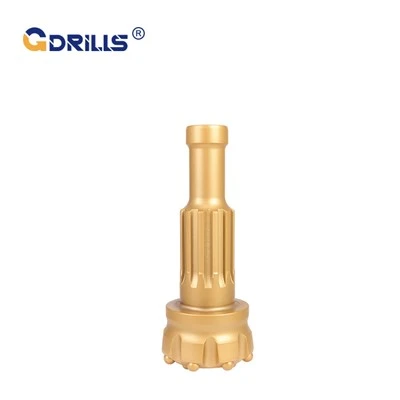
If you've ever worked in mining, quarrying, or construction drilling, you know button bits are the unsung heroes of the job. They're the hard, tungsten-carbide tipped bits that bite into rock, concrete, and hard formations to make your drilling work happen. But here's the thing: even the best button bits won't perform like they should if you're not optimizing how you use, maintain, and pick the right ones. As a button bits supplier that's been in the game for years, I've seen way too many teams waste time, money, and energy because they don't nail down the basics of performance optimization. Today, I'm breaking down the real, actionable stuff that works-not just the textbook jargon.
First off, let's start with picking the right button bit for your job. I can't stress this enough-using the wrong bit is like trying to use a screwdriver to hammer a nail. Different drilling conditions call for different bits. If you're working with air compressor rock drills, for example, our Air Compressor Rock Drill Bit T51 is built for high-impact, medium-to-hard rock, and it's a total workhorse for open-pit mining and horizontal drilling. But if you're dealing with tighter spaces or smaller rigs, tapered bits might be your call. Tapered bits are designed for manual or small pneumatic drills, and they're super reliable for underground mining or bench drilling. Don't sleep on thread types either-if you need something that fits specific top-hammer drill rigs, our R Thread Button Drill Bit has consistent threading that cuts down on misalignment and wear. For formations that are extra abrasive, you'll want a R32 Tungsten Carbide Drill Bit-the carbide tip is specially formulated to resist wear from sandstone or granite, so it lasts way longer than standard bits. And if you need a fit for 38mm or 45mm shanks, our R35 Thread Rock Bit is a perfect match for rigs that need that exact thread compatibility. Skimping on the bit type is the #1 mistake I see new drill operators make. Take the time to match the bit to your drill rig, rock hardness, and drilling method-you'll see a huge difference right away.
Next up, pre-drill setup that actually makes a difference, not just the basic checklist. A lot of teams skip small steps here, and it adds up to bad performance fast. First, check your air pressure (for air drills) or hydraulic pressure (for top-hammer rigs) before you start. If your air pressure is too low, your bit won't have enough impact to break through hard rock-you'll end up grinding the buttons instead of biting, which causes excessive wear. If it's too high, you'll get over-impaction, which can chip or crack the carbide tips. I usually tell teams to aim for 90-110 PSI for air compressor drills, but adjust based on your rock: harder rock needs the higher end, softer rock can handle lower. Then, make sure your rig is aligned perfectly. If the bit is at an angle when it starts drilling, it will wobble, wear unevenly, and you'll end up with a lopsided hole. Spend 2 minutes double-checking the alignment-no more, and it saves you hours of rework later. Also, clean the hole collar before inserting the bit. Any rock dust, debris, or old bit fragments in the hole will jam the new bit, cause it to bind, and that leads to broken threads or snapped shanks. This is such a simple step but so many people rush it.
Once you're drilling, how you handle the actual process is make-or-break. Let's talk about feed pressure first-this is the force pushing the bit into the rock. Too much feed pressure, and the bit gets stuck, the carbide buttons chip, and you'll burn through the bit in no time. Too little, and you're not getting effective penetration, wasting energy and time. The sweet spot is light, consistent feed pressure-you want the bit to "bite" into the rock, not force its way in. If you hear a high-pitched squeal or see sparks, you're applying too much pressure. Adjust immediately. Then, water flow (if you use water for dust suppression or cooling) is another big one. If you don't have enough water, the bit overheats-carbide tips get soft, and they wear down super fast. Too much water, and it washes away lubrication and rock dust, which can cause the bit to slide instead of drill. For most dry or semi-dry drilling, we recommend 10-15 liters per minute. If you're in a super dusty area, bump it up a little, but don't flood the site. Also, don't run the bit at full speed all the time. Slow down a little when you hit a hard layer-full speed on hard rock is a recipe for button damage. Your drill rig's speed control is there for a reason. I've had teams tell me they pushed a bit too hard through a basalt layer, and the buttons were gone in half a shift-same bit, same rig, just adjusting speed would have doubled its life.
Maintenance is where you can extend your button bit's life by 20-30% easily, and it's so straightforward. After every drill shift, take 10 minutes to pull the bit out and clean it. Use a wire brush (or compressed air, if you have it) to blast off all rock dust and debris from the shank, threads, and carbide buttons. If you leave dust caked on, when you put the bit back in the rig, it will wear the threads and cause connection issues. Then, inspect the buttons-look for chips, cracks, or flat spots. A small chip might not seem like a big deal, but it will get bigger over time, and it will throw off the balance of the bit, leading to uneven wear. If a button is flat, you can dress it with a diamond file (or a bit dresser tool) to sharpen it-this restores the bit's ability to bite into rock, so you don't have to replace it early. Every 50-100 hours of use, do a deep clean: soak the bit in warm, soapy water to get rid of embedded dust, and check the shank for bending. A bent shank will cause the bit to wobble, so if you see any bending, replace the bit or get it straightened professionally-don't risk it, it will mess up your drilling and waste your time. Also, store bits correctly when you're not using them. Keep them in a dry, temperature-controlled place, and don't stack heavy tools on top of them. Stacking can bend the shank or crack carbide buttons. I see teams toss bits in a toolbox with hammers and wrenches all the time-this is a quick way to destroy a good bit.
Now, let's talk about common mistakes that kill bit performance, because avoiding these will make a huge difference. First, reusing a damaged bit. A lot of guys think "it's just a small chip, it'll work fine," but that chip will grow with every use, and soon you have to replace the whole bit, which is more expensive than replacing it early. Second, ignoring the shank. The shank is what connects the bit to the rig, so if it's worn or dirty, the connection is loose. That leads to vibration, which breaks bits and damages rigs. Third, not matching bit size to hole size. If you use a bit that's too small, you have to ream the hole, which wears the bit faster. Too big, and you have to force the bit, leading to impaction. Fourth, skipping lubrication for threaded bits. If your bit has threads, a little bit of anti-seize lubricant on the shank and threads will prevent rust and make it easier to remove later. Don't use grease that's too thick-it will trap dust, but a light anti-seize is perfect.
As a button bits supplier, I've worked with drill operators, mining companies, and construction crews for years, and the best performing bits I see are the ones that people take care of, not just the most expensive ones. The Air Compressor Rock Drill Bit T51 is great, but if you over-pressure it and don't maintain it, it won't last half as long. Same with the R32 Tungsten Carbide Drill Bit-its carbide is top-tier, but if you use it for soft sandstone, you're wasting money on a overkill bit that wears down slow. The key is matching the bit to your job, setting up the rig correctly, drilling smart, and maintaining the bit regularly.
If you're tired of short bit life, frequent replacements, and slow drilling, don't guess-reach out. We have a team that can help you pick the right bit for your specific rock, rig, and project, whether that's the Tapered Drill Bits for small underground jobs or the R35 Thread Rock Bit for large-scale quarrying. We're here to answer questions, offer tips, and make sure your drilling operations run smoothly, no matter how big or small the job.
References:
-
"Drilling Performance Optimization: A Guide for Mining and Construction Operations" – International Drilling Contractors Association, 2022
-
"Tungsten Carbide Button Bit Wear Mechanisms and Mitigation Strategies" – Journal of Rock Drilling Engineering, Vol. 18, No. 3, 2021
-
"Top-Hammer Drilling Best Practices" – National Stone Sand & Gravel Association, 2023