

Do button bits require a specific drill speed? That's a question I get a lot as a button bits supplier. Let me tell you, it's not as straightforward as you might think.
First off, what are button bits? Button bits are essential tools in the drilling industry. They're used in a variety of applications, from mining and construction to geotechnical exploration. These bits have studs, or "buttons," on the tip that help break through different types of rock and other materials.
Now, back to the question of drill speed. The short answer is yes, button bits do require a specific drill speed, but it depends on a bunch of factors.
Factors Affecting Drill Speed
Rock Type. The type of rock you're drilling through is a major factor. If you're drilling through soft rock like sandstone, you can usually get away with a higher drill speed. Soft rocks are easier to break, so the button bit doesn't need to work as hard. You can spin the bit faster, which means you can get the job done more quickly. On the other hand, if you're dealing with hard rock like granite, you'll need to slow down. Hard rocks are more resistant to the button bit's cutting action. If you go too fast, you risk damaging the buttons on the bit. The high speed can cause excessive wear and tear, and you might even break some of the buttons. This not only means you'll have to replace the bit more often, but it can also slow down your drilling process.
Bit Size. The size of the button bit also plays a role in determining the right drill speed. Smaller bits can generally handle higher drill speeds. They have less mass, so they can spin more easily. For example, a small button bit with a diameter of 1-2 inches can often be used at a relatively high speed. Larger bits, however, need to be run at a slower speed. The increased mass of a large bit means that it takes more energy to spin it. If you try to run a large bit at a high speed, you might overload the drill machine. This can lead to mechanical problems and reduce the overall efficiency of the drilling operation.
Drill Machine Capacity. The capacity of the drill machine is another important factor. Different drill machines have different power ratings and speed capabilities. You need to make sure that the drill speed you choose is within the capabilities of your drill machine. If your drill machine is not powerful enough to handle a certain drill speed, it won't be able to provide the necessary torque to turn the button bit effectively. This can result in slow drilling, uneven cutting, and premature wear of the bit.
Recommended Drill Speeds for Different Situations
Soft Rock Drilling. For soft rock drilling, a good starting point for drill speed is around 800-1000 revolutions per minute (RPM). This allows the button bit to quickly break through the soft material without causing excessive wear. However, you may need to adjust the speed based on the specific type of soft rock and the size of the bit.
Hard Rock Drilling. When drilling through hard rock, you'll want to keep the drill speed between 200-400 RPM. This slower speed gives the button bit enough time to break through the hard material without overheating or causing damage to the buttons.
Importance of Maintaining the Right Drill Speed
Maintaining the right drill speed is crucial for several reasons. First of all, it affects the lifespan of the button bit. If you run the bit at the wrong speed, it can wear out much faster. This means you'll have to replace the bit more often, which can be costly.
Secondly, the right drill speed ensures efficient drilling. When the bit is spinning at the optimal speed, it can cut through the material more smoothly and quickly. This saves time and increases productivity.
Finally, using the correct drill speed can improve the quality of the hole. If the bit is spinning too fast or too slow, the hole may not be straight or the walls may be rough. This can cause problems later on, especially if you're using the hole for something like installing a foundation or running a pipeline.
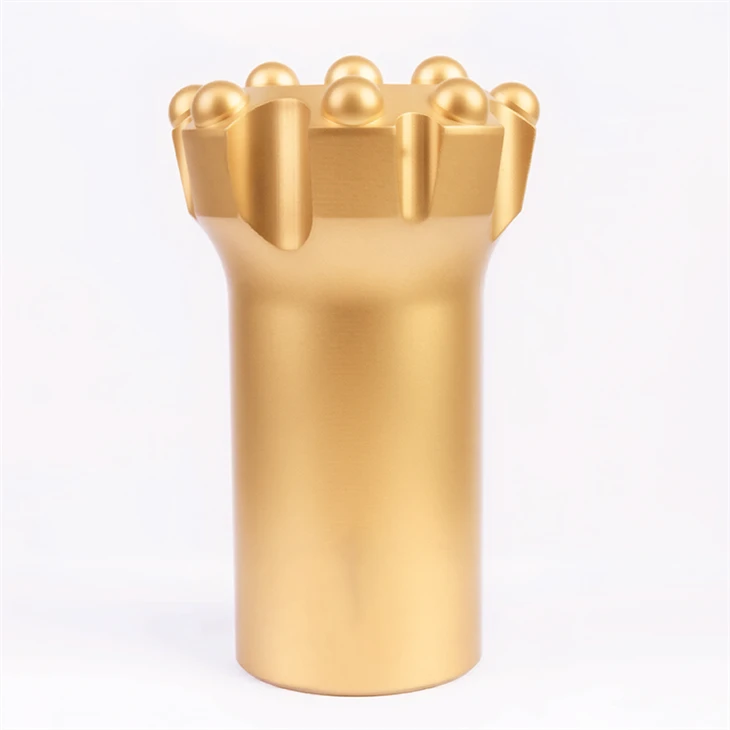
Our Button Bit Products
We offer a wide range of button bits to suit different drilling needs. For example, our T-Thread Button Bit Selection Guide provides detailed information on choosing the right T-thread button bit for your specific application.
Our Drill Bit Rock ST58 is a high-quality bit designed for efficient rock drilling. It's suitable for a variety of rock types and can be used at different drill speeds depending on the conditions.
The R25 Thread Button Bit is another popular option. It's commonly used in small to medium-sized drilling projects and offers excellent performance.
If you're in the coal mining industry, our Rock Drill Bits Coal Mining T45 is specifically designed to meet the demands of coal mining operations.
And for general-purpose drilling, our Button Bit T38 is a reliable choice. It's versatile and can be used in different types of rock and soil.
If you're interested in purchasing our button bits or have any questions about drill speeds or our products, feel free to reach out. We're here to help you find the right solution for your drilling needs. Whether you're a small contractor or a large mining company, we have the right button bits for you.


