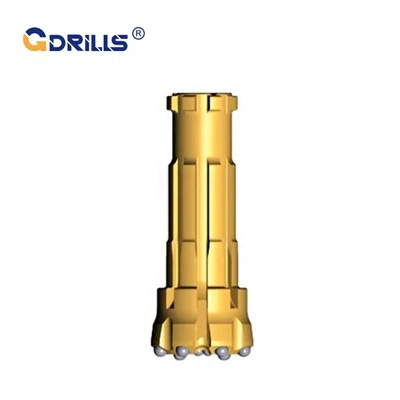
Selecting the right bit teeth for DTH (Down-The-Hole) drill bits is a crucial decision that can significantly impact the efficiency, performance, and cost-effectiveness of drilling operations. As a DTH drill bits supplier, I understand the importance of providing our customers with the knowledge and guidance to make informed choices. In this blog post, I will discuss the key factors to consider when selecting bit teeth for DTH drill bits and provide some practical tips to help you make the right decision.
Understanding DTH Drill Bits and Bit Teeth
Before delving into the selection process, it's essential to have a basic understanding of DTH drill bits and bit teeth. DTH drill bits are used in various drilling applications, including mining, construction, and geothermal exploration. They are designed to be used with a DTH hammer, which delivers high-frequency impacts to the drill bit, allowing it to penetrate hard rock formations.
Bit teeth are the cutting elements of the DTH drill bit. They are typically made of tungsten carbide, a hard and wear-resistant material that can withstand the high stresses and abrasion associated with drilling. The shape, size, and arrangement of the bit teeth can have a significant impact on the drilling performance, including the rate of penetration, the quality of the borehole, and the lifespan of the drill bit.
Factors to Consider When Selecting Bit Teeth
Rock Formation
The type of rock formation you are drilling into is one of the most important factors to consider when selecting bit teeth. Different rock formations have different hardness, abrasiveness, and fracture characteristics, which can affect the performance of the bit teeth. For example, hard and abrasive rocks, such as granite and quartzite, require bit teeth with high wear resistance and toughness. On the other hand, softer rocks, such as limestone and sandstone, may require bit teeth with a more aggressive cutting geometry to achieve a higher rate of penetration.
Drilling Application
The specific drilling application also plays a role in the selection of bit teeth. Different drilling applications, such as blast hole drilling, exploration drilling, and geothermal drilling, have different requirements in terms of the rate of penetration, the quality of the borehole, and the lifespan of the drill bit. For example, blast hole drilling typically requires a high rate of penetration and a large borehole diameter, while exploration drilling may require a more precise and accurate borehole.
Bit Size and Design
The size and design of the DTH drill bit also affect the selection of bit teeth. The bit size determines the number and size of the bit teeth, while the bit design determines the arrangement and orientation of the bit teeth. For example, a larger bit size may require more bit teeth to achieve a higher rate of penetration, while a specific bit design may require a particular arrangement of bit teeth to optimize the drilling performance.
Bit Tooth Shape and Geometry
The shape and geometry of the bit teeth can have a significant impact on the drilling performance. Different bit tooth shapes, such as spherical, conical, and chisel-shaped, have different cutting characteristics and are suitable for different rock formations and drilling applications. For example, spherical bit teeth are more suitable for soft to medium-hard rocks, while conical bit teeth are more suitable for hard and abrasive rocks.
Bit Tooth Material
The material of the bit teeth is another important factor to consider. Tungsten carbide is the most commonly used material for bit teeth due to its high hardness, wear resistance, and toughness. However, different grades of tungsten carbide have different properties, and the choice of material depends on the specific drilling application and the type of rock formation. For example, a higher grade of tungsten carbide may be required for drilling in hard and abrasive rocks, while a lower grade of tungsten carbide may be sufficient for drilling in softer rocks.
Types of Bit Teeth for DTH Drill Bits
Spherical Bit Teeth
Spherical bit teeth are one of the most common types of bit teeth used in DTH drill bits. They have a spherical shape and are suitable for drilling in soft to medium-hard rocks. Spherical bit teeth provide a smooth and efficient cutting action, which can result in a higher rate of penetration and a better-quality borehole.
Conical Bit Teeth
Conical bit teeth have a conical shape and are suitable for drilling in hard and abrasive rocks. They provide a more aggressive cutting action, which can help to break through hard rock formations more quickly. However, conical bit teeth may also cause more wear and tear on the drill bit, resulting in a shorter lifespan.
Chisel-Shaped Bit Teeth
Chisel-shaped bit teeth have a flat, chisel-like shape and are suitable for drilling in hard and fractured rocks. They provide a high impact force, which can help to break through hard rock formations more effectively. However, chisel-shaped bit teeth may also cause more vibration and noise during drilling, which can affect the operator's comfort and safety.


Practical Tips for Selecting Bit Teeth
Consult with a Professional
If you are unsure which bit teeth to choose for your DTH drill bit, it's always a good idea to consult with a professional. As a DTH drill bits supplier, we have extensive experience and knowledge in the field of drilling and can provide you with expert advice and guidance. We can help you assess your drilling needs, recommend the most suitable bit teeth for your application, and provide you with technical support and after-sales service.
Consider the Cost
The cost of the bit teeth is an important factor to consider, especially if you are working on a budget. However, it's important to remember that the cheapest option may not always be the best option. You should consider the quality, performance, and lifespan of the bit teeth when making your decision. A higher-quality bit tooth may cost more upfront, but it can save you money in the long run by reducing the frequency of bit changes and increasing the efficiency of your drilling operations.
Test the Bit Teeth
Before committing to a large order of bit teeth, it's a good idea to test them in your drilling operations. This will allow you to evaluate the performance of the bit teeth and determine if they are suitable for your application. You can also compare the performance of different bit teeth and choose the one that provides the best results.
Maintain the Bit Teeth
Proper maintenance of the bit teeth is essential to ensure their optimal performance and lifespan. You should regularly inspect the bit teeth for wear and damage and replace them as needed. You should also clean the bit teeth after each use to remove any debris and prevent corrosion.
Conclusion
Selecting the right bit teeth for DTH drill bits is a critical decision that can have a significant impact on the efficiency, performance, and cost-effectiveness of your drilling operations. By considering the factors discussed in this blog post and following the practical tips provided, you can make an informed decision and choose the bit teeth that are best suited for your application.
At Gdrills, we are a leading supplier of DTH drill bits and accessories. We offer a wide range of high-quality bit teeth in different shapes, sizes, and materials to meet the needs of our customers. Our products are designed to provide excellent performance, durability, and value for money. If you are interested in purchasing DTH drill bits or bit teeth, please contact us to discuss your requirements. We will be happy to provide you with more information and assist you in making the right choice.